It is July, meaning: Time for another release of OpenTodoList!

At a first glance, this release does not look to be too fancy. And well, it’s true: We are mostly cleaning up things. Especially important in this version are fixes in our WebDAV sync code, which ensures that synchronization via NextCloud, ownCloud but also other WebDAV servers is working seamlessly.

Changelog

  • rpdev/opentodolist#345: This one is a super important fix. Basically, OpenTodoList had a kind of “quick sync” feature, to speed up syncs with a server. However, the code was faulty - by design - causing the app from sometimes not pulling changes from the server. If you are unaware, this could have looked like data loss; but even if you knew about that, you had to create a local change on that device for a full sync to be triggered. This version of OpenTodoList removes the quick sync feature and hence makes sure the app always pulls the latest changes, which should improve the multi-device usage of the app quite a bit.
  • rpdev/opentodolist#350: This is the next mission critical bug that got fixed. In the previous release, we introduced some changes that were supposed to increase the interoperability with more WebDAV server implementations. However, a bug sneaked in which caused the sync with some implementation to completely break. Well… it’s fixed 😉
  • rpdev/opentodolist#289: This is rather a developer topic. We now use ccache (at least partially) in our CIs, which gives a slight speed up in build times.
  • rpdev/opentodolist#295: Usually, the app uses your system font settings by default. This works in most situations, but sometimes, the font is too large or too small (which can be caused by several things). In case you encounter this issue on one of your devices, you can now change the font size in the settings of the app.
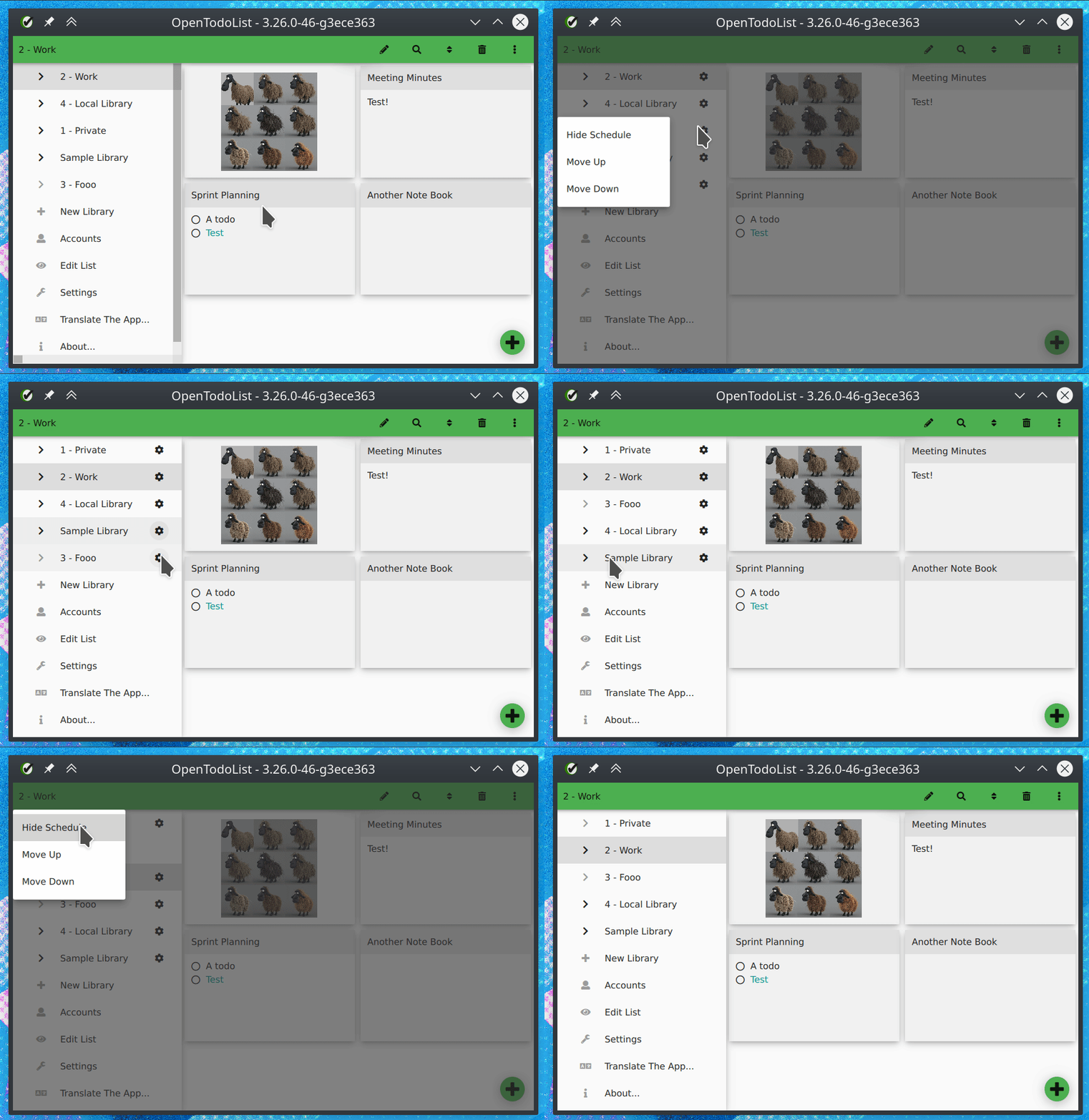
  • rpdev/opentodolist#345: Recently, we introduced the possibility to collapse the list of tags shown below a library in the side bar. The button for this was - however - rather small and especially hard to hit on touch devices. That should be way better now.
  • rpdev/opentodolist#349: Like a lot of other apps, OpenTodoList has this 3-dots menu on the top right, where additional actions can be triggered from. In addition, in the past we had this small “triangle” menu right next to it, which was used to access extra actions associated with tool buttons, we could not show due to the window width (or device width) was not wide enough. That was super confusing, so in this version, both menus are unified into a single one!
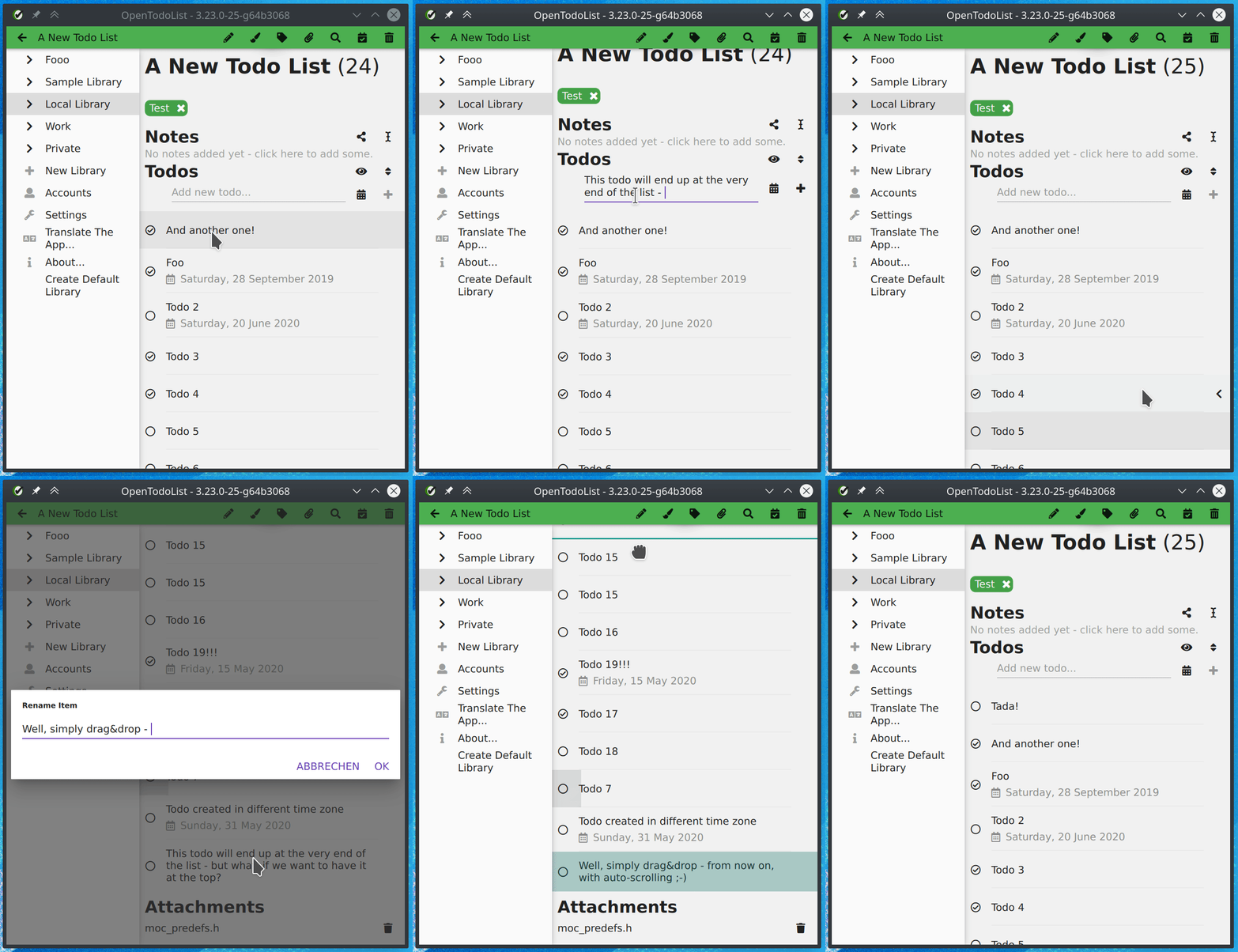
  • rpdev/opentodolist#153: Do you also have todo lists with a lot of entries? Or did you library grow and you have now dozens of notes, todo lists and images on one page? That - on it’s own - isn’t too much of an issue. But if you want to move an item using drag and drop, previous versions of OpenTodoList where quite cumbersome to use, as the page would now scroll up/down once you were near the page borders during a move operation. Rejoice, starting with this version of the app, pages scroll automatically down or up, so you can move items from one end of the page to the other in one shot 🏹
  • rpdev/opentodolist#352: The previous version of OpenTodoList brought quite some enhancements regarding scheduling of items. However, in the UI, a little regression sneaked in. You were now actually offered to also set due dates on tasks (i.e. items inside a todo). However, these don’t have a due date property at all. Consequentially, we cleaned up the mess, so this option is no longer falsely shown in the user interface.
When moving items using drag and drop, pages now scroll up and down when you are near the border - this allows to move an item from one end of a page to the other in a single drag and drop operation.

Downloads

  • Please find the download links for major platforms on GitHub.
  • For Android, the release is available via Google Play.
  • For iOS, the release is available via the App Store.
  • If you use snap, you can install the app from the snapcraft.io.
  • If you use flatpak, you can install the app from Flathub.

Known Issues

There are currently no known issues. If you encounter any issues, please file a bug report in the bug tracker.
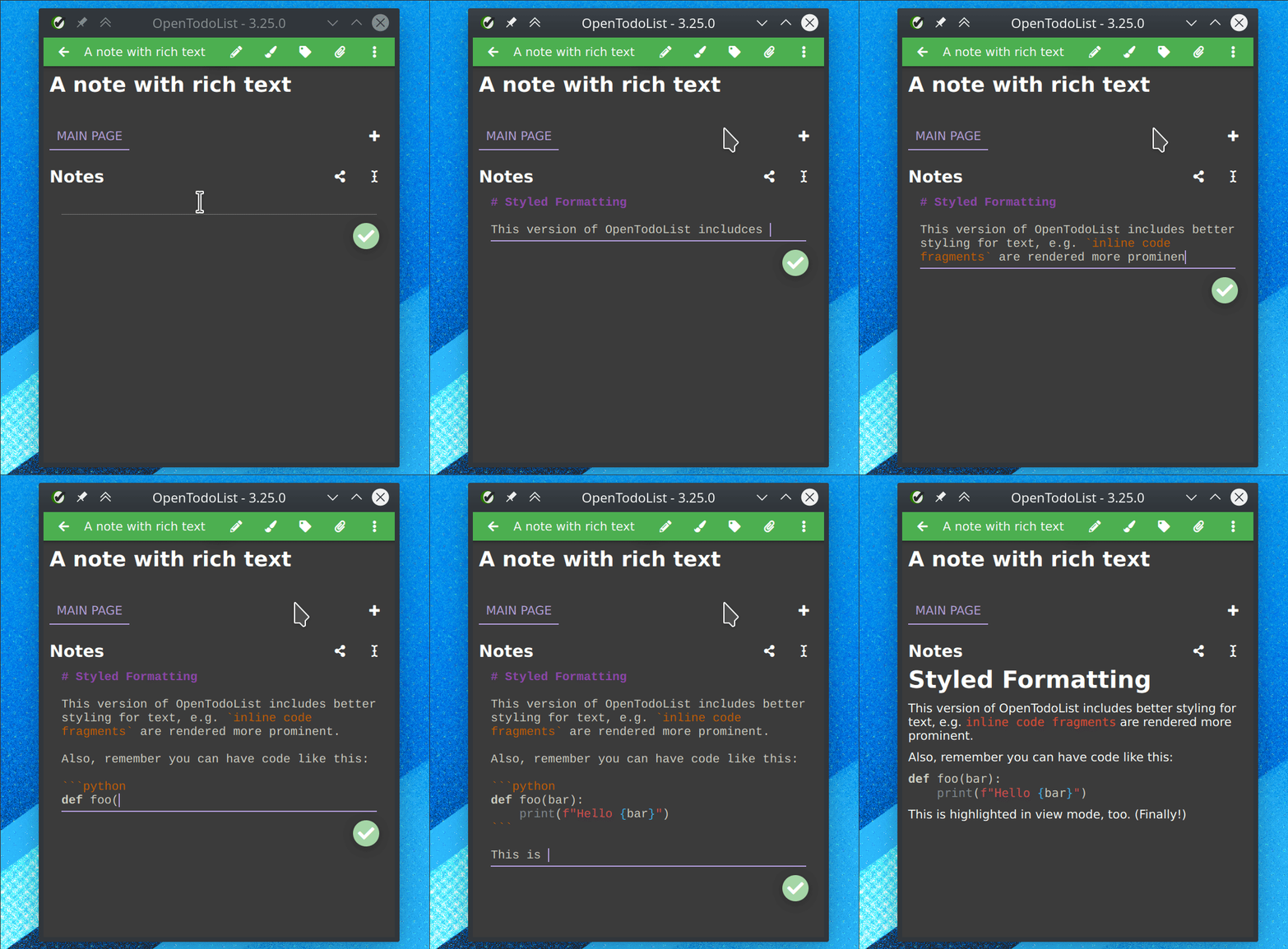
We have the 1st of June - time for another release of OpenTodoList! And hey, this is a really great release. If you would have to pick a common theme for v3.23 it would probably be scheduling. But even if you don’t regularly use the scheduling capabilities of the app, this one still has some goodies for all of you! 🎁

Changelog

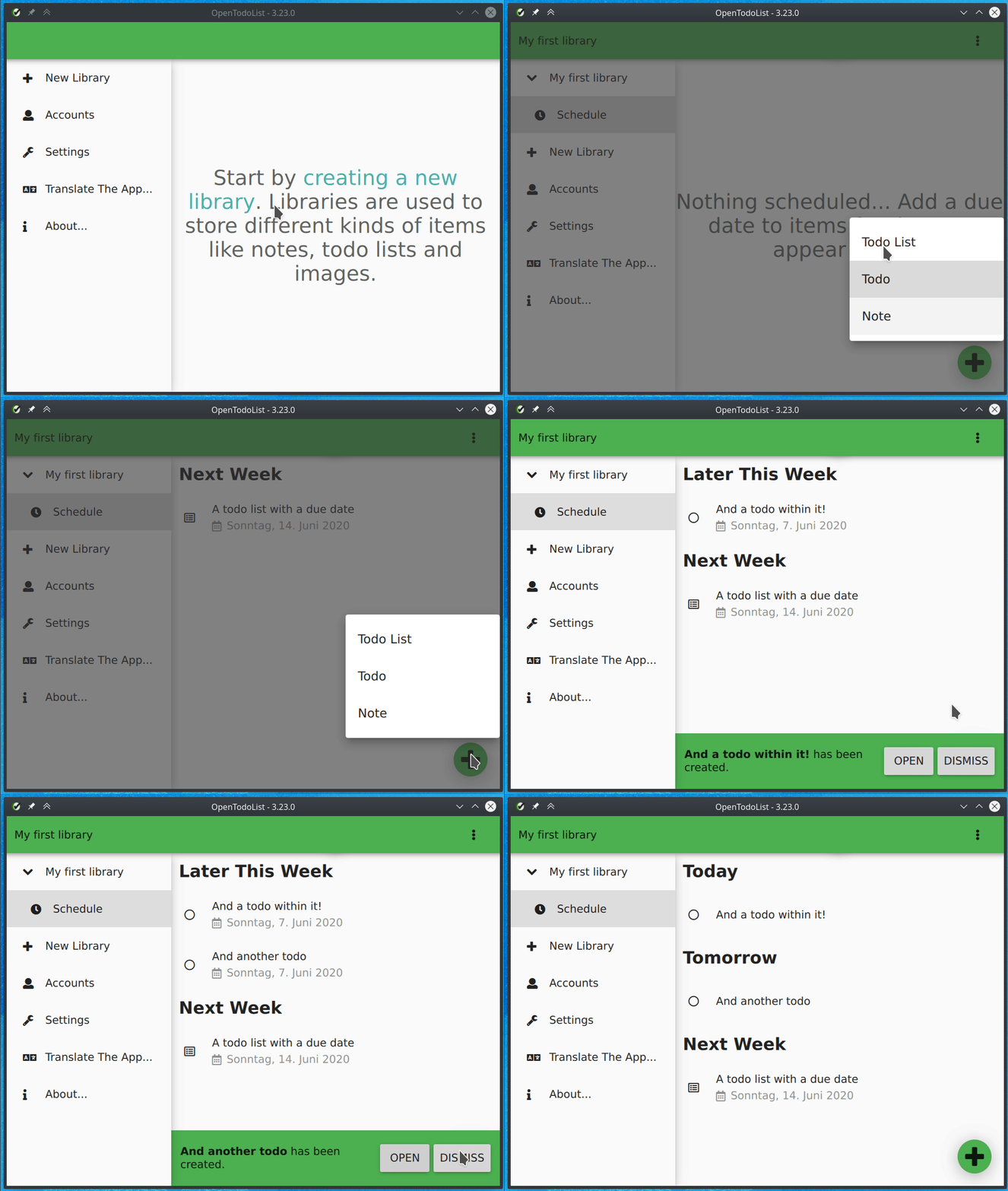
  • rpdev/opentodolist#337: Previously, to add an item to the schedule page, you had to navigate to this item and assign a due date to it. Now, you can create new items directly from the schedule page! It is a simple as hitting the new ➕ button and either select todo list, todo or note! So if you use OpenTodoList to organize your day, this feature makes it more easy than ever before to keep order in your days!
  • rpdev/opentodolist#338: You can now easily re-schedule items in the schedule page. Just right click (on a desktop system) or press and hold an item (on a device with touch input) to bring up the context menu. From there, you can easily re-schedule an item to today, tomorrow, this or the next week or a custom date.
  • rpdev/opentodolist#332: Want to use OpenTodoList to get regular reminders to water your plants or clean up your desk? No problem - that’s easily possible now. After setting a due date for an item, you can now also add a recurrence pattern. After marking a recurring item as done, it won’t simply be closed but is immediately re-scheduled to the next occurrence you set. The app supports two ways of scheduling patterns. You can select items to recur on a fixed cadence (e.g. every week always on the same day as the original due date) or you can select the next date to be relative to the day you mark the item as done (this is in particular useful for items, where you want to ensure you have even breaks between occurrences - like the mentioned watering of plants 😉).
  • rpdev/opentodolist#292: On Android, you items are no longer included in Google’s auto backup. While this might first sound like a regression, it actually is in line withe the app’s promise - ensuring you maintain control over your data. For this reason, we don’t want data to accidentally leak over to Google servers. If you need to sync your data, it is recommended to create libraries on a WebDAV server or select a folder which can be backed up by other means (like another sync client app).
  • rpdev/opentodolist#340 and rpdev/opentodolist#343: In the calendar dialog used to select due dates, today is not highlighted so you don’t have to remember which day we actually have 📅
  • rpdev/opentodolist#342: Todo and task listings have also been refined a bit in this version, making such lists much easier to grasp and also to interact with (in the case of mobile touch centric devices).
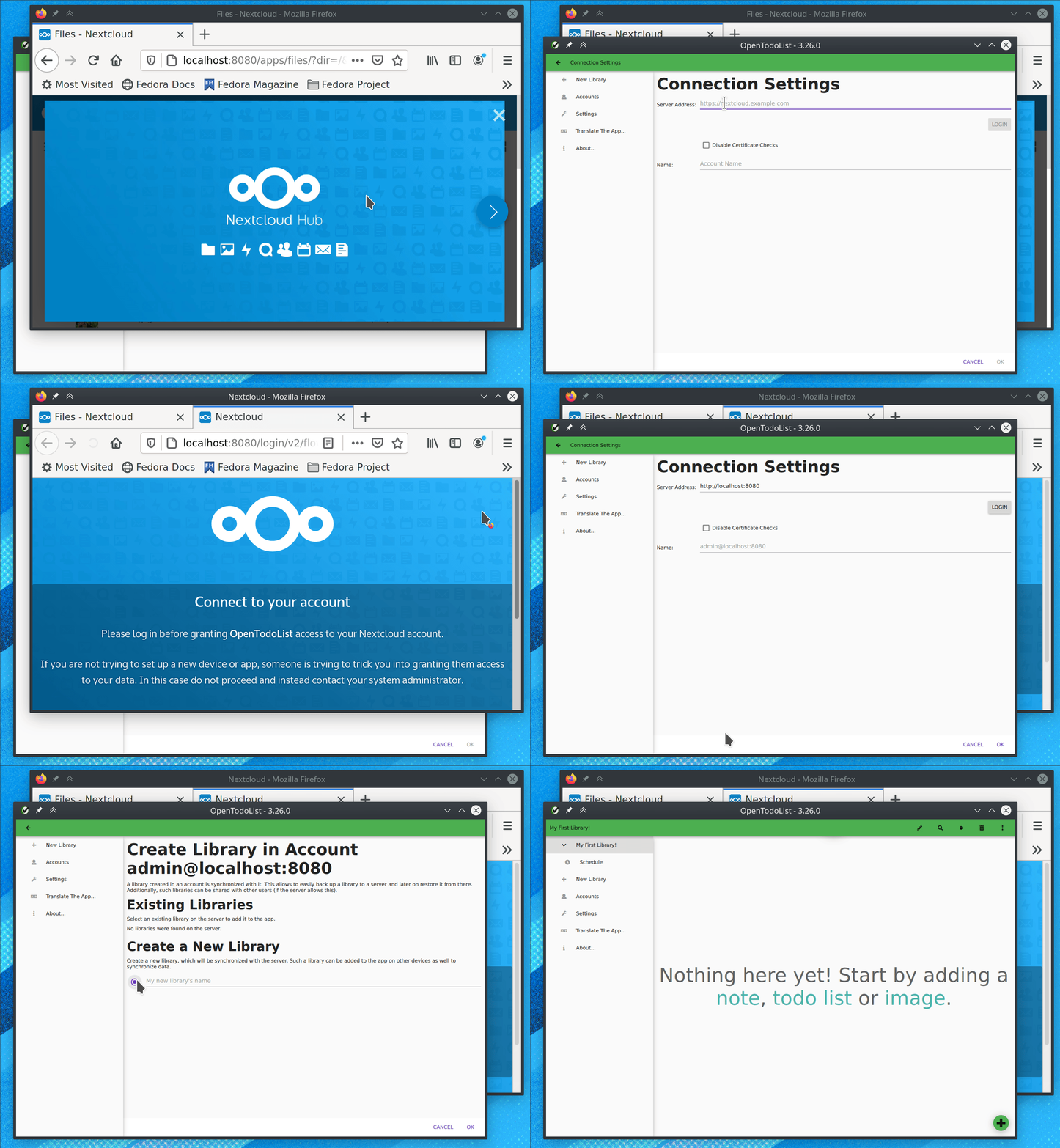
  • rpdev/opentodolist#339: With this version, OpenTodoList properly handles redirects. In fact, before, the app would not handle them at all. During the fix, we ran into further issues with some particular servers. Bottom line: When your WebDAV server uses redirects, you should now be finally able to use the app with it.
  • rpdev/opentodolist#334: Another fix - using the search function no longer crashes the app.
  • rpdev/opentodolist#330: And another one: The automatic upload of releases to GitHub now works again.
  • rpdev/opentodolist#329: You can now once again add tags to todo lists - this functionality was broken with the previous release.
  • rpdev/opentodolist#331: And the last for for this release: We fixed the URL of some module we include in the source repository (this is important if you clone the app’s sources e.g. from a mirror and not the official repository on GitLab).
Version 2.23 of OpenTodoList heavily ups the scheduling capabilities of the app.

Downloads

  • Please find the download links for major platforms on GitHub.
  • For Android, the release is available via Google Play.
  • For iOS, the release is available via the App Store.
  • If you use snap, you can install the app from the snapcraft.io.
  • If you use flatpak, you can install the app from Flathub.

Known Issues

There are currently no known issues. If you encounter any issues, please file a bug report in the bug tracker.
It’s the 1st of May, Labor Day, and - you guessed it already - time for another release of OpenTodoList 😉

Changelog

  • rpdev/opentodolist#320: Do you have several libraries and each of them extensively uses tags to group items? Then you might already experience a quite overfull sidebar. With this release, we make it a bit easier to keep an overview - you can now collapse the items there per library, so you can hide details from libraries you currently don’t work with.
  • rpdev/opentodolist#324: This is a kind of bug fix. Previously, if some underlying libraries we use are updated, it could have happened that the app won’t start anymore (currently, this affects mainly the Flatpak distribution of the app). This is fixed now, so the app should start even after such updates.
  • rpdev/opentodolist#315: We updated to Qt 5.14, which implicitly fixes some things and will enable some interesting new features in future releases of the app.
  • rpdev/opentodolist#322: In the previous releases we reworked the app icon a bit. However, due to a misconfiguration, the iOS version was still delivered with the old icon. That gets fixed now.
  • rpdev/opentodolist#323: When creating a new item, a little popup notice is shown. Recently, we introduced a regression where in this popup HTML code was shown. This one is now also fixed.
  • rpdev/opentodolist#170: We now use several static code checkers on the app’s sources. This should improve the overall code quality and even avoid some bugs in general.
Libraries in the side bar can now be collapsed so they use less space if they are currently not needed.

Downloads

  • Please find the download links for major platforms on GitHub.
  • For Android, the release is available via Google Play.
  • For iOS, the release is available via the App Store.
  • If you use snap, you can install the app from the snapcraft.io.
  • If you use flatpak, you can install the app from Flathub.

Known Issues

There are currently no known issues. If you encounter any issues, please file a bug report in the bug tracker.
Just a few days after the previous release it is time for a bug fix one 🐛

Changelog

  • rpdev/opentodolist#313: In the last release we updated the app icon a bit. Unfortunately, we did the update of the Android launcher icon incorrectly (or well: it was incomplete). This is fixed now, so the icon should be properly displayed now again.
  • rpdev/opentodolist#314: First reported on macOS, this bug actually could hit you on every platform. The app could potentially crash right during startup due to a bug handling missing passwords and when you still have libraries present that were created in earlier versions of the app.

Downloads

  • Please find the download links for major platforms on GitHub.
  • For Android, the release is available via Google Play.
  • For iOS, the release is available via the App Store.
  • If you use snap, you can install the app from the snapcraft.io.
  • If you use flatpak, you can install the app from Flathub.

Known Issues

There are currently no known issues. If you encounter any issues, please file a bug report in the bug tracker.

Wow, what a March! With Corona spreading all over the world and causing shut downs on lots of countries, it certainly isn’t an easy month for most of us. But hey, life goes on so to keep up a bit of the usual flow, here’s another version of OpenTodoList!

While this month’s version does not bring the groundbreaking features, it still is an interesting release with some useful usability improvements here and there. Enjoy! 😉

Changelog

  • rpdev/opentodolist#310: Most apps on Android and iOS allow a simple pull down to refresh gesture in list views to fetch e.g. the most recent changes into a timeline. Well, OpenTodoList does so now, too. No matter if you are viewing the items in a library or if you are inside a todo list, you can swipe down from the top to get the latest changes from the server (well, if you are using a sync to NextCloud, ownCloud or any WebDAV server). In case you are using the app on a Desktop system, you now have a sync option available in the page menu on all of these pages, too (before, you had to go to the library page to manually trigger a sync).
  • rpdev/opentodolist#307: When you often take notes in your items but - at least on a Desktop system - want to have them available in another app for editing, this version also has something for you. You can now save such notes to Markdown files on disks to more easily continue editing in a full fledged Markdown editor.
  • rpdev/opentodolist#276: With this version we also reworked the app icon a bit! 🎨 The old one was a bit dated (well, it served well for several years), so it was time to update it a bit.
  • rpdev/opentodolist#306: We reworked the todo list page and the todo page to perform better when the lists of todos/tasks get bigger. With the previous implementation, you potentially already notices a slight stuttering when opening such a page.
  • rpdev/opentodolist#305: If an error is encountered during a sync, the next sync will run a full sync - this ensures, that all changes are fetched from the server. Before, it could happen that after an unsuccessful sync the app would not get all the changes from the server, causing missing items or item properties not being up to date.
  • rpdev/opentodolist#269: Handling of missing passwords for an account is now much better. In case the app cannot load the secrets, it will show a warning in the toolbar, where you can click on to see the account with the missing password. Future versions of the app will extend this error reporting mechanism and also show other warnings there.
  • rpdev/opentodolist#284: The AppImage and Snap version of the app now consistently are shipped with the Qt Wayland plugins and no longer prevent the plugin from being used. So if you are on a Linux distribution where Wayland is used, the app should run as a native Wayland client as well (instead of falling back to Xwayland).
  • rpdev/opentodolist#304: We decreased the size of the Windows installer significantly. Previously, we (unintentionally) shipped the Windows versions with debug symbols, which caused the file size to be quite huge.
  • Last but not least: This version contains a lot more translations into non-English languages! The app usually should select the language automatically depending on you system language. However, you can always override this in the settings and pick another one. If you find your language is not yet supported (or some strings still need to be translated), you can help us by joining the project on POEditor.
You can now easily pull down to trigger a sync. Additionally, you can now access the menu to trigger a sync on any page as well.

Downloads

  • Please find the download links for major platforms on GitHub.
  • For Android, the release is available via Google Play.
  • For iOS, the release is available via the App Store.
  • If you use snap, you can install the app from the snapcraft.io.
  • If you use flatpak, you can install the app from Flathub.

Known Issues

There are currently no known issues. If you encounter any issues, please file a bug report in the bug tracker.